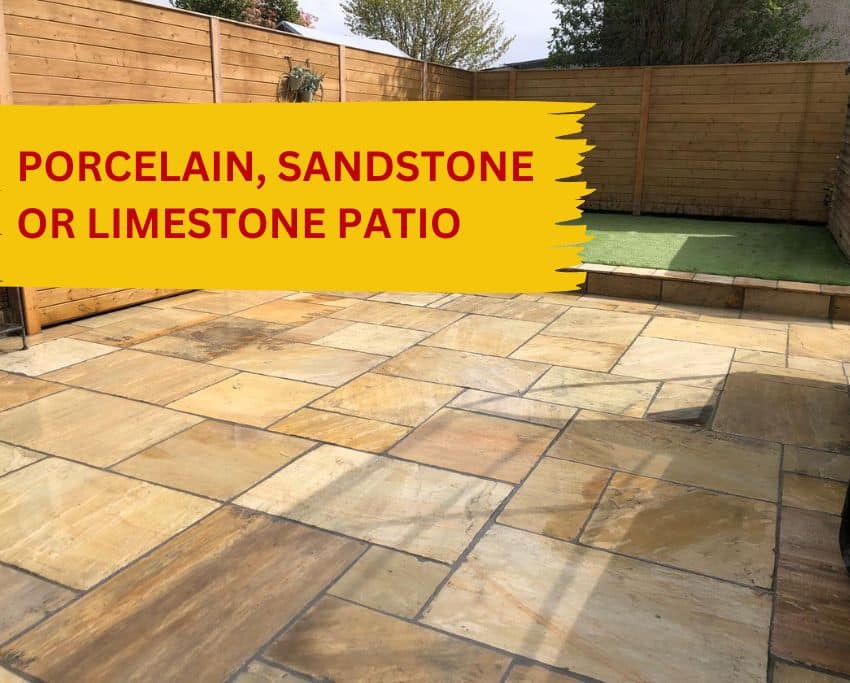
Choosing between porcelain, sandstone, and a limestone patio is not just a design decision. In Dublin, the best patio material has to cope with rainfall, moss, frost, shaded gardens, drainage problems and day-to-day use outdoors.
This guide compares the three most popular options for Irish gardens, with practical notes on safety, durability, cost, appearance and pest risk around paved areas.
Key Takeaways
- Porcelain patios are one of the lowest-maintenance options and can be a reliable anti-slip choice for wet Dublin weather, especially when outdoor porcelain paving tiles are R11 anti-slip rated
- Sandstone gives warm character, rich colours and a natural appearance, but it needs more cleaning and sealing than porcelain.
- Limestone gives a sleek, classic natural stone look and offers a secure, slip-resistant surface, even when wet, when the correct textured finish is chosen.
- Patio cost in Dublin depends on the material, ground conditions, access, drainage and installation quality – not just the price of the paving slabs.
- The best choice depends on budget, style and how much upkeep you are willing to do over the lifetime of the patio.
Quick Comparison: Best Patio Material for Dublin’s Weather
If you are comparing porcelain, sandstone and limestone patios in Dublin, weather performance should be your starting point. A patio can look beautiful, but standing water, moss and frost are what usually determine whether it stays safe, practical and easy to maintain over time.
| Patio material | Slip resistance in rain | Frost resistance | Moss / green growth | Maintenance level | Typical lifespan | Guide installed cost in Dublin | Typical appearance |
|---|---|---|---|---|---|---|---|
| Porcelain | Excellent with R11 anti slip finish | Excellent | Low | Low maintenance / minimal maintenance | 25-30+ years | €110-€190+ per m² | Modern, clean, stone-effect, concrete-effect, timber-effect |
| Sandstone | Good when riven, weaker if algae builds up | Good if properly installed and sealed | Medium to high | Medium to high | 15-25 years | €80-€140+ per m² | Warm, rustic, varied, traditional |
| Limestone | Good with textured finish | Good | Medium | Medium | 15-25 years; sealed premium stone can last longer | €80-€140+ per m² | Smooth, elegant, neutral, contemporary |
These are guide ranges, not fixed quotes. Complex groundwork, poor access, drainage work, old patio removal, steps, raised areas, premium jointing and waste removal can push the final price higher.
For a wider overview of slab types, see our complete guide to patio slabs.
Porcelain Patios in Dublin: Low-Maintenance & Hard-Wearing
Outdoor porcelain paving is made from dense paving tiles fired at extremely high temperatures, which creates a hard wearing surface that performs better outdoors than standard ceramic tiles.
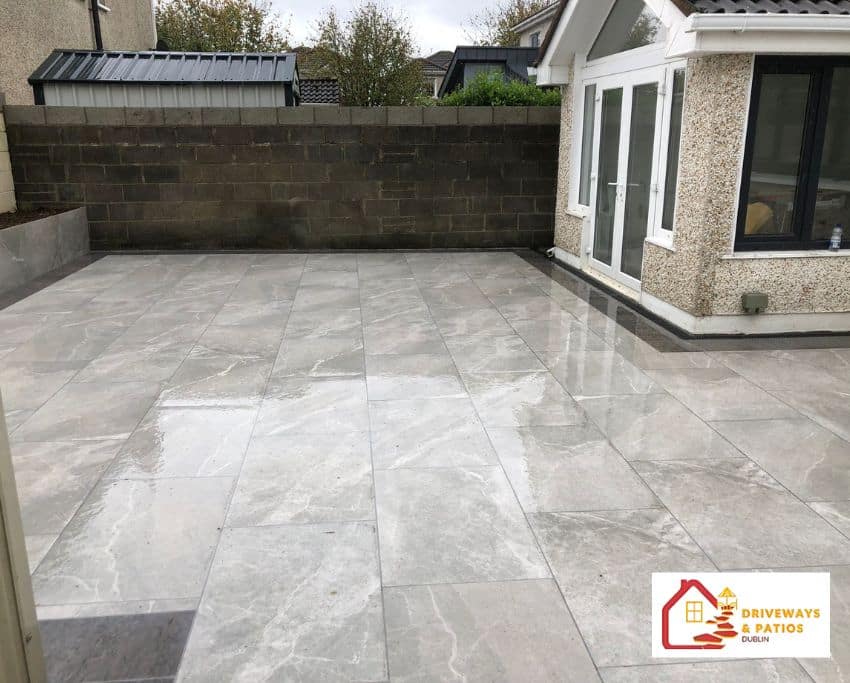
Because porcelain is manufactured from fine clays and minerals, the finished porcelain slabs are dense, consistent and low in porosity. They have a low water absorption rate for durability, which is one reason porcelain paving is now popular for modern Irish gardens.
When choosing porcelain for a Dublin patio, check that the tiles are suitable for outdoor use and have an R11 anti-slip rating where possible. This extra grip is useful on rainy days, around children, and in shaded gardens where moss and surface dirt can build up quickly.
Porcelain also handles winter well. Quality outdoor porcelain tiles are designed to resist frost damage when correctly installed. Their low water absorption helps reduce freeze-thaw damage, staining and algae growth. Maintenance is simple:
- Brush leaves and dirt off the patio.
- Wash occasionally with mild detergent.
- Keep joints clean and free of organic debris.
- Avoid unnecessary sealers, as most porcelain does not need sealing.
Design choice is another major advantage. A wide range of designs of outdoor porcelain patio tiles are available, including grey, beige, cream, white, black, anthracite, concrete-effect, stone-effect and timber-effect finishes.
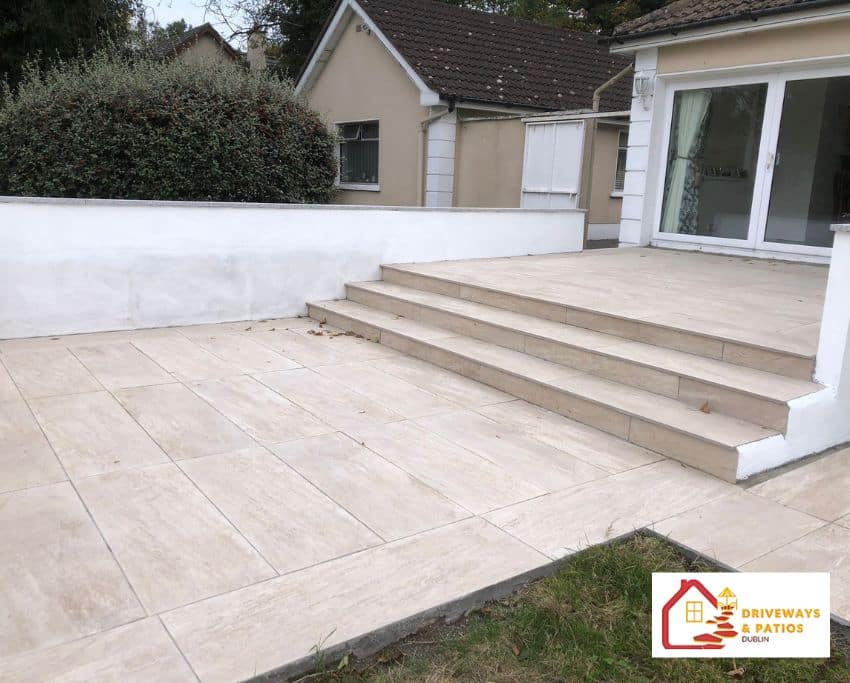
This makes porcelain a strong choice for:
- Contemporary extensions.
- Rental properties where easy upkeep matters.
- Family patios where safety and easy cleaning matter.
- Large-format outdoor flooring with fewer visible joints.
Porcelain usually has a mid-to-high initial cost, but the lifetime maintenance cost is often lower than sandstone or limestone because it needs less sealing, scrubbing and stain treatment. If you are considering this finish for your own garden, see our Dublin porcelain patios service page, or compare options in more detail in our porcelain patio tiles article.
Sandstone Patios in Dublin: Warm, Textured Natural Stone
Sandstone is a classic natural stone choice and has been used in Irish gardens for decades. It is usually sold as sandstone paving slabs, often with a riven surface that gives texture, grip and a traditional garden feel.
The main appeal is character. Indian sandstone colours such as Kandla Grey, Autumn Brown, Raj Green and warmer brown blends add natural variation to patios, paths and planting areas. No two slabs look exactly the same, which is part of the charm.
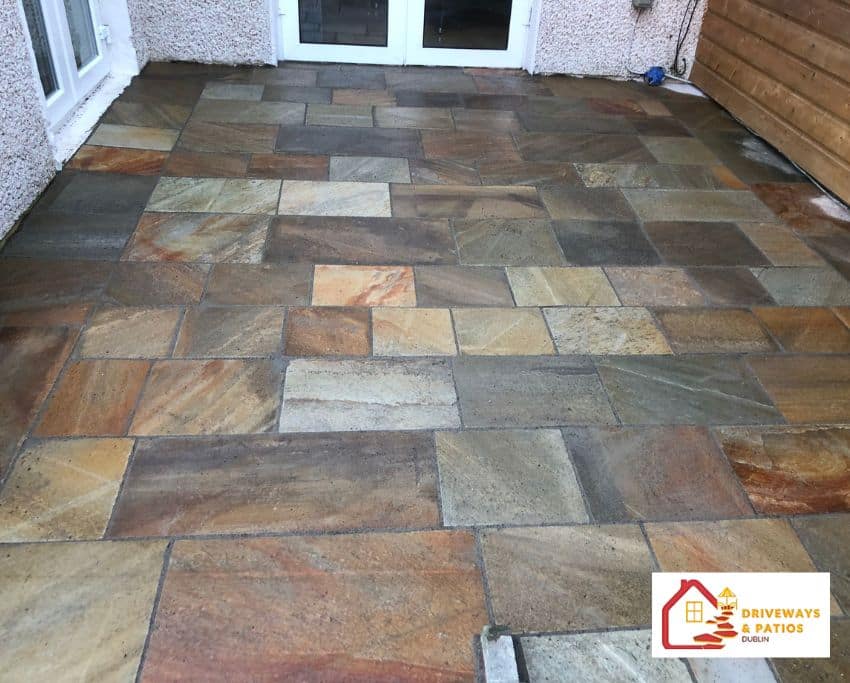
Sandstone performs well when properly installed, but it is more porous than porcelain. In Dublin’s wet climate, sandstone can darken, absorb moisture and weather over time. That does not make it a bad choice, but it does mean you need to be realistic about upkeep.
Typical advantages include:
- Warm natural appearance.
- Good grip from riven texture.
- Works well beside red-brick homes and cottage-style planting.
- Often lower supply price than premium porcelain or limestone.
Typical drawbacks include:
- More algae and moss than porcelain.
- More frequent cleaning.
- Sealing is often recommended.
- Wider or uneven joints can collect weeds and dirt.
- Softer stone can crack or flake if badly installed.
Sandstone suits homeowners who like a rustic, lived-in patio and do not mind occasional cleaning. It is also useful for curved paths, traditional garden layouts and projects where a unique natural stone finish is more important than perfect uniformity.
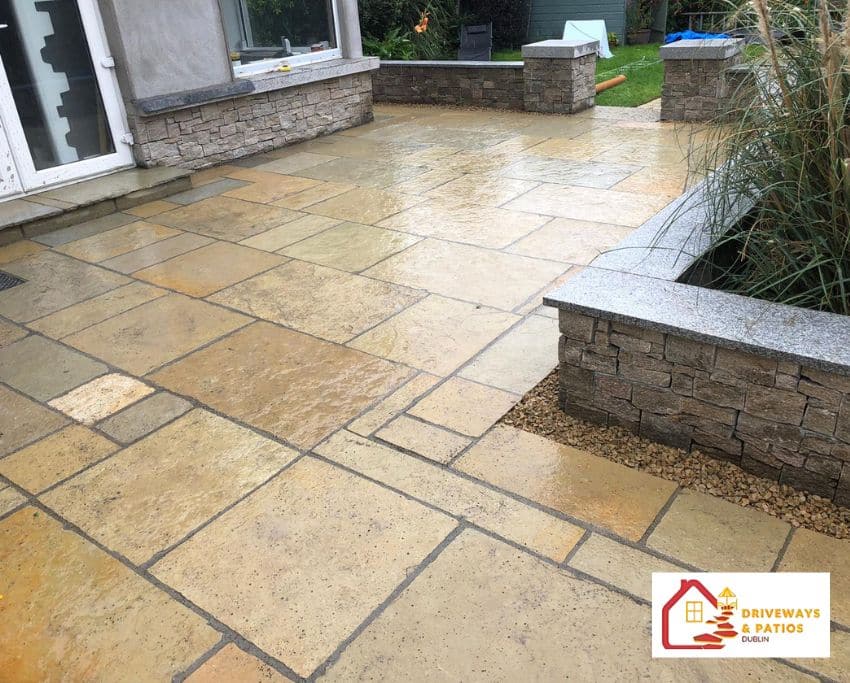
Entry-level sandstone paving slabs can be more affordable than premium porcelain paving, but over years the cleaning, sealing and occasional joint repairs can narrow the gap. For installation-specific information, visit our sandstone patios in Dublin page. For a direct material comparison, read our sandstone vs limestone for patios article.
Limestone Patios in Dublin: Smooth, Contemporary Natural Stone
A limestone patio is a middle ground between rustic sandstone and manufactured porcelain. Limestone is natural stone paving, but it gives a smoother and more uniform finish than materials like sandstone.
Limestone is a natural sedimentary rock composed primarily of calcite. Limestone forms in marine environments over millions of years, and natural fossils or markings can give each slab a unique character. This gives limestone a real stone feel without the strong colour variation of sandstone.
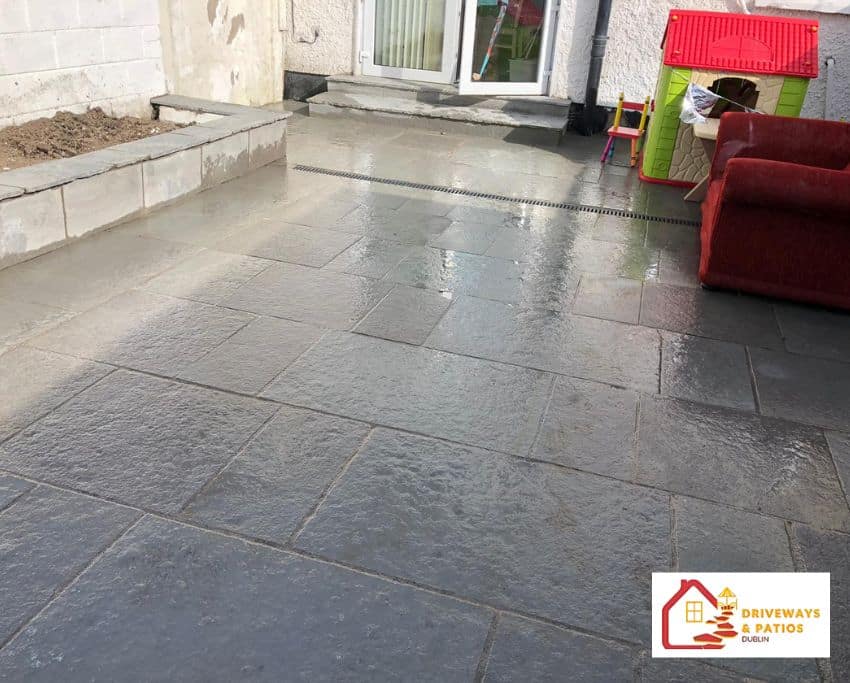
Limestone typically appears in neutral tones from light beige to dark grey. Common options include black limestone, Kota Blue, light grey, beige and darker charcoal tones. Limestone paving is available in various colours and sizes, making it suitable for formal terraces, side passages, courtyard gardens and dining patios.
Limestone is generally denser and less porous than sandstone, but it still needs the right textured finish, proper installation and regular care to perform well outdoors.
Limestone paving has anti-slip qualities suitable for outdoor use when the surface is textured rather than polished. Limestone offers a secure, slip-resistant surface even when wet, but honed or polished finishes are not recommended for exposed Dublin patios.
Good-quality textured limestone can perform well in Irish weather when correctly installed, drained and maintained. A properly sealed limestone patio can last 25 to 50 years or more with proper installation and maintenance.
There are a few important care points:
- Limestone is prone to surface etching from acidic substances.
- Common cleaning methods for limestone involve pH-neutral solutions to avoid damage.
- Sealing limestone is recommended to protect against stains and enhance longevity.
- Dark limestone may need sealing to protect colour and reduce fading.
Limestone requires minimal maintenance and can enhance property value, but it is not maintenance-free. You still need sweeping, gentle washing and periodic resealing.
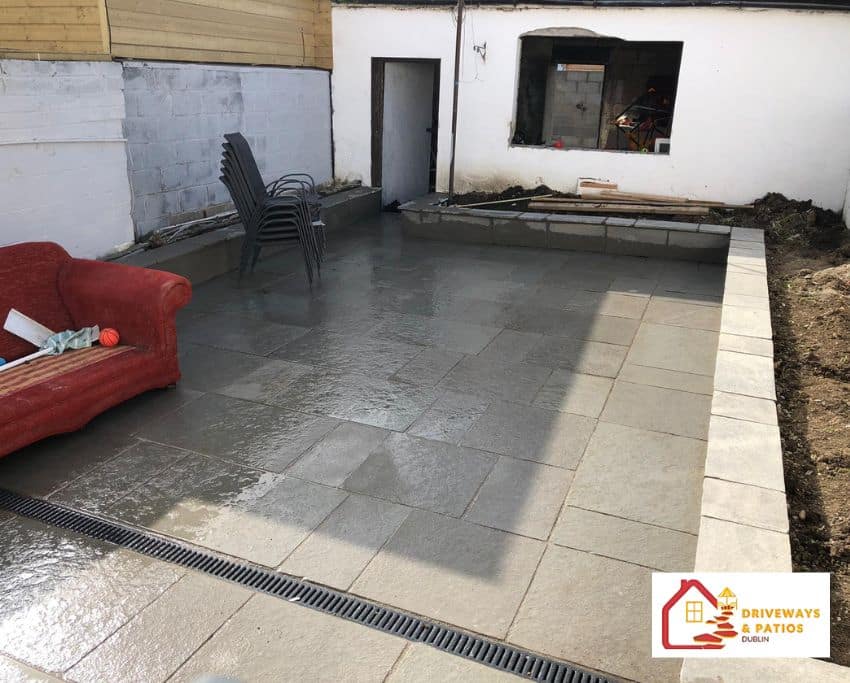
If you are selecting limestone, ask for samples and compare finishes in natural light. Whether you visit showrooms, order online, or check local stock, make sure the stone, sizes and finishes are suitable for outdoor patios in Ireland. You can also read our limestone patios in Dublin service page and our limestone paving article for a deeper look at this material.
Best Patio Material by Priority: Safety, Style, Budget & Upkeep
The best patio material depends on what matters most to you. Here is a practical way to choose.
- Best for low maintenance: porcelain. If you want a clean patio that is easy to wash and resists staining, outdoor porcelain is usually the best choice.
- Best for traditional charm: sandstone. If you like warmth, colour variation and a natural appearance that changes over years, sandstone is hard to beat.
- Best for sleek natural stone: limestone. If you want real stone with smoother lines and neutral tones, a limestone patio is a strong option.
- Best for wet or shaded gardens: porcelain. High-grip outdoor porcelain tiles generally perform best where surfaces stay damp.
- Best for a formal dining terrace: limestone. Its smoother finish and structured look suit modern furniture and outdoor entertaining.
Aesthetically, sandstone adds rustic character, limestone gives a more minimal stone style, and porcelain can mimic concrete, timber or natural stone while offering extra practicality. If you want black, white, beige, grey or brown finishes, all three materials offer options, but porcelain usually has the widest range and most consistent collection of colours. You can also explore more mixed design options in our guide to types of paving materials.
Budget also depends on how you calculate it. Sandstone may have the lower upfront price. Limestone often sits in the middle. Porcelain can cost more at installation, but it can work out cheaper over 10-15 years if it avoids sealing, heavy cleaning and replacement risk.
From a sustainability point of view, natural stone can have a very long service life when properly installed and maintained well. Porcelain has higher manufacturing energy, but its longevity, reduced chemical cleaning and low upkeep are advantages.
Before choosing, ask:
- Is the garden sunny or shaded?
- Will children, older relatives or customers use the patio?
- How often are you willing to clean and seal it?
- Is drainage already a problem?
- Do you want a 15-year surface or a longer-term project?
Patio Cost & Maintenance in Dublin: What to Expect
Final patio cost Dublin-wide varies by material, site access, drainage and ground preparation. The paving slabs price is only one part of the project. For a fuller breakdown, see our patio cost in Dublin guide.
A small city garden with tight access can cost more per square metre than a larger open site. Heavy clay soil, removal of old paving, steps, raised areas, drainage channels and premium jointing compounds can all add to the final price.
Maintenance also differs:
| Material | Cleaning | Sealing | Main long-term issue |
|---|---|---|---|
| Porcelain | Occasional brushing and washing | Usually no | Dirty joints if neglected |
| Sandstone | Regular washing, possible power washing | Often every few years | Algae, staining, weeds in joints |
| Limestone | Gentle cleaning with pH-neutral products | Recommended | Acid etching, colour fade, staining |
Irish rainfall, moss and frost increase maintenance time, especially on more porous natural stone. Choosing the right material at the start can reduce issues such as slippery algae, loose joints and water pooling against the house.
Local Considerations for Dublin Patios: Weather & Drainage
Dublin patios face a specific mix of problems: frequent rain, overcast days, shaded side passages, compact urban gardens and occasional frost. These conditions make drainage just as important as the material.
A well-built patio needs:
- A solid compacted sub-base.
- A suitable fall away from the house.
- Correct bedding.
- Properly filled joints.
- Drainage channels, soakaways or permeable joints where needed.
- Stable edges that do not leave gaps.
Standing water encourages moss, slippery surfaces and damp issues near foundations. It can also create pest-friendly conditions. Poorly installed paving can leave voids under slabs, gaps along walls, broken corners and damp sheltered areas. These spaces can appeal to rats, mice, ants and other insects around Dublin homes.
Loose joints can also trap food debris, leaves and moisture. Well-laid porcelain, sandstone or limestone patios with solid bedding, sealed edges and proper jointing reduce harbourage for rodents and insects. The material matters, but the installation details matter more. If water is already an issue around your property, our guide to driveway drainage solutions in Dublin gives useful background on common drainage problems and fixes.
For most Dublin homes, porcelain is the safest low-maintenance choice, sandstone suits traditional gardens, and limestone works well when you want a smoother natural stone finish. The right option depends on your garden’s drainage, shade, budget and how much maintenance you are willing to do.
After more than 20 years working on patios and paving projects across Dublin and surrounding areas, we usually find that drainage, shade and maintenance expectations matter just as much as the paving material itself.
FAQs