
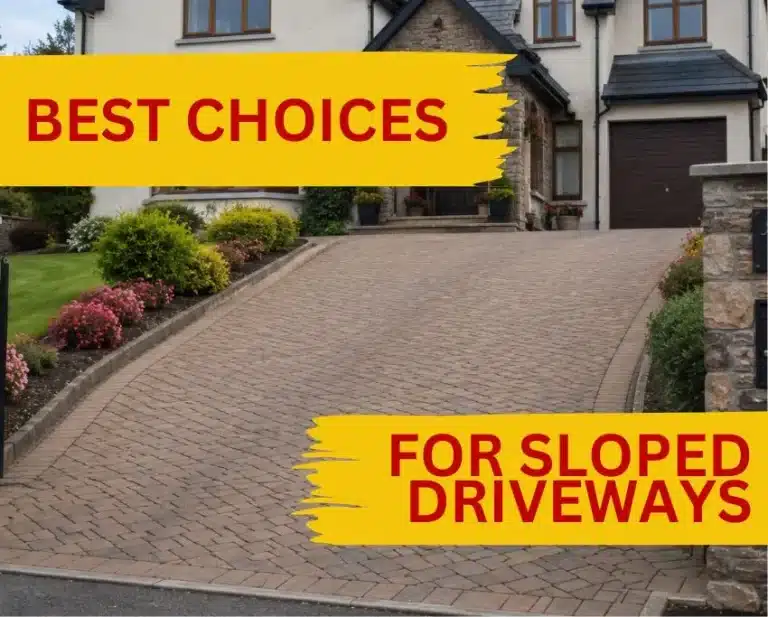
What is the best driveway for sloped front gardens?
The best driveway for sloped front gardens usually combines:
- a textured driveway surface,
- strong edge restraints,
- a properly compacted sub-base,
- and proper drainage.
For many Dublin homes, block paving is a strong all-round option, while stabilised gravel grids can suit gentler slopes where budget and drainage matter.
A sloped driveway is never just about the surface you see. The slope, water runoff, grip, ground condition, retaining walls, drainage channels and how vehicles enter the property all matter. Get those wrong and even a smart-looking front garden can become awkward to park on, slippery in wet conditions or prone to soil erosion.
In Dublin, where rain has no problem showing up uninvited, a sloped front garden needs thoughtful design before any material is installed.
Why sloped driveways need more planning than flat ground
A driveway on flat ground is usually simpler to design. A sloped garden is different. Water naturally wants to move downhill, loose materials can shift, vehicles need traction, and any weak edge can slowly open up under pressure.
On a steep slope or steep incline, the main concerns are:
- water flow running towards the road, house or garage
- poor drainage causing puddles, ice or water damage
- soil erosion around the driveway edges
- vehicles scraping underneath at the entrance
- loose gravel washing downhill
- slippery surfaces in wet or icy conditions
- uneven ground causing settlement over time
- walls, kerbs or beds failing to hold soil properly
A gradient of around 1 in 10 is generally comfortable for most vehicles. That means the driveway rises or falls by roughly one metre for every ten metres of horizontal distance. Once a driveway goes beyond that, the design needs closer attention, especially around the entrance, the parking area and any change in level.
Best driveway surfaces for a sloped front garden
1. Block paving for grip, structure and kerb appeal
Block paving is often one of the best driveway surfaces for a sloped front garden. The individual concrete blocks create a textured surface, which helps tyre grip in wet conditions. The modular design also gives the driveway a little flexibility compared with one continuous slab.
For sloped driveways, block paving works best when it has:
- a strong compacted sub base
- robust edge restraints, such as concrete-bedded kerbs or pin kerbs
- a suitable laying pattern for vehicle movement
- channel drains where surface water needs to be intercepted
- careful levels so water is directed away from the house
Permeable block paving can be especially useful on challenging slopes because it allows surface water to pass through the paving instead of rushing downhill across the surface. That can reduce water flow velocity and help prevent flooding or erosion.
Block paving also gives a front garden a finished look. It can be used with borders, natural stone details, planting pockets or steps to make the entrance more visually appealing without turning the whole garden into one hard surface.
2. Stabilised gravel grids for gentler slopes and tighter budgets
Gravel driveways can work on slopes, but not all gravel is suitable. Smooth pea gravel is not ideal on a sloped driveway because it moves too easily. Crushed gravel with jagged edges gives better grip and locks together more effectively.
For sloped front gardens, stabilised gravel grids are usually the smarter option. These grids hold the gravel in place, reduce rutting, improve traction and keep the surface permeable. They are also generally more budget-friendly than block paving or resin-bound systems.
Gravel grids are best suited to moderate slopes rather than very steep grades. On slopes below roughly 25%, they can offer excellent drainage and good grip when installed with:
- a geotextile membrane
- a stable compacted sub base
- proper edging
- angular crushed gravel
- careful falls for water runoff
They can also soften the driveway feel, especially beside planting beds, grass strips, hedging or low retaining walls. For semi-rural properties, larger front gardens or Dublin homes where a softer landscape finish is preferred, gravel grids can be a practical choice.
3. Resin-bound driveways for a clean, permeable finish
Resin bound driveways are popular because they look smooth, modern and visually appealing. They are also permeable when installed as part of the correct system, allowing water to drain through the surface instead of running across it.
On a sloped driveway, that permeability can be a real advantage. Less surface water running downhill means less pressure on channel drains, less erosion at the edges and a lower risk of water collecting near the road or entrance.
The catch? Resin bound needs a stable underlying base. If the ground moves, settles or cracks, the resin surface can suffer. For a sloped front garden, the existing ground and sub base must be properly assessed before resin is considered.
Resin bound can be a good option where:
- the slope is moderate
- the base is stable
- the homeowner wants a clean modern finish
- water management is a key concern
It is not a magic carpet for bad ground. The base still does the hard work.
4. Tarmac and asphalt for moderate slopes
Tarmac can perform well on moderate slopes when installed correctly. It gives a smooth, practical surface and handles vehicle loads effectively, which makes it a common choice for larger driveways and access areas.
On steeper slopes, asphalt can become more difficult to install because the material may move before it sets. On slopes over around 10%, the contractor may need to assess grip, laying conditions, compaction and whether a high-friction surface dressing or alternative material is more suitable.
Tarmac works best on a sloped driveway when paired with:
- strong edging or kerbs
- proper drainage
- suitable surface texture
- well-planned falls
- a stable base
It is practical, but it should not be treated as the automatic choice for every steep incline.
5. Textured concrete for strength, but not smooth concrete
Concrete can be strong and practical on sloped driveways, but the finish matters. Smooth concrete on a slope can become slippery in wet conditions. Textured concrete, brushed concrete or imprinted concrete can offer better grip.
On sloped driveways, concrete surfaces should include:
- surface texturing for traction
- expansion joints to accommodate movement
- proper falls for water flow
- adequate drainage
- a strong sub base
Concrete can suit driveways where a simple, solid surface is wanted, but it needs careful detailing. If cracking, ground movement or poor drainage are ignored, the surface may look tired faster than expected.
Drainage is not optional on a sloped driveway
Proper drainage is critical for any sloped driveway. Water naturally moves downhill, and on a hard surface it can move quickly. Without drainage, surface water can wash out gravel, weaken edges, flood the pavement, run towards the house or freeze in cold weather.
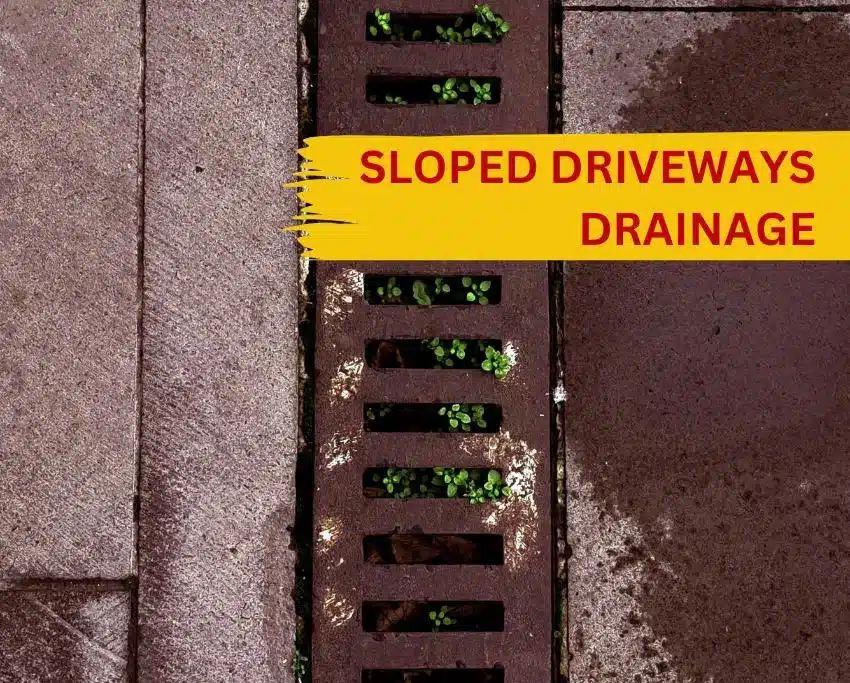
Useful drainage options can include:
Channel drains
Channel drains can be installed across a sloped driveway to intercept surface water before it reaches the road, pavement, garage or house. The water must then be directed to a suitable soakaway or approved drainage system.
French drains
French drains use a trench, clean stone and often a perforated pipe to redirect water away from the driveway. They can be useful along the side of a sloped driveway where water is collecting or eroding the soil.
Permeable surfaces
Permeable pavers, resin bound systems and stabilised gravel allow water to pass through the surface. This can reduce runoff, prevent flooding and help protect the driveway structure.
Planting pockets and beds
Planting pockets are not just decorative. In the right position, they help soften the driveway, hold soil, slow water flow and reduce erosion. Low-growing plants such as creeping phlox can be used in suitable beds or pockets, especially around retaining walls or steps.
Retaining walls can turn a problem slope into a feature
For steep slopes, retaining walls are often essential. They hold soil, manage elevation changes and create safer, more usable areas. A steep front garden does not always need to feel like a ramp into the house. With the right walls and levels, it can become a structured entrance.
Retaining walls can help create:
- flatter parking areas
- safer pedestrian routes
- steps or stepping stones beside the driveway
- planting pockets
- raised beds
- a clearer focal point from the street
- a more balanced front garden design
Terracing a sloped driveway can break one steep grade into smaller, more manageable sections. It can also create opportunities for plants, natural stone details and garden walls that make the entrance a stunning feature rather than just a practical place to park the car.
For very steep approaches, curves or a serpentine driveway design may reduce the overall steepness. This only works where there is enough space, but it can make the driveway safer and more inviting for vehicles.
The sub base and edge restraints matter as much as the surface
The visible surface gets the compliments. The sub base quietly prevents the drama.
On sloped driveways, the sub base needs to be strong enough to resist movement, vehicle pressure and water damage. Many driveway projects need a substantial compacted stone sub base, often 150mm or more depending on ground conditions, vehicle use and the chosen material.
Edge restraints are just as important. Without strong edges, block paving can spread, gravel can wash out, resin can fail at the perimeter and tarmac can weaken along the sides.
Good slope construction normally considers:
- deeper excavation where needed
- compacted stone layers
- geotextile membrane for gravel systems
- concrete-bedded kerbs
- pin kerbs
- retaining walls
- channel drains
- water direction
- safe transitions at the entrance
This is why professional installation matters. A sloped driveway has less room for guesswork than a flat one.
More ideas to make a sloped driveway feel better
A sloped driveway can still have character. The practical details matter first, but design matters too.
Consider:
- a separate walkway with steps for safer access
- stepping stones through a planted bed
- natural stone borders around block paving
- low walls to frame the entrance
- planting pockets to soften hard surfaces
- gravel margins beside resin or block paving
- lighting near steps or changes in level
- a focal point near the entrance, such as a planted bed or stone detail
- keeping some green space instead of paving the full front garden
Many Dublin homeowners want off-street parking, but the best results usually keep the front garden feeling like a front garden. A driveway should create practical space without making the whole property look like a car park.
Do you need planning permission for a sloped driveway?
Planning permission may be required in Dublin if the project involves:
- creating a new vehicular access,
- significantly widening an existing entrance,
- changing boundaries, affecting a protected structure or,
- altering how water leaves the property.
For sloped front gardens, it is especially important to think about surface water. The driveway should not send water onto the public footpath, road or neighbouring property. Permeable surfaces, channel drains, soakaways and planted areas may all form part of the drainage plan.
The safest approach is to check the specific property, entrance and drainage situation before starting work, especially if the front garden is being converted into parking for the first time.
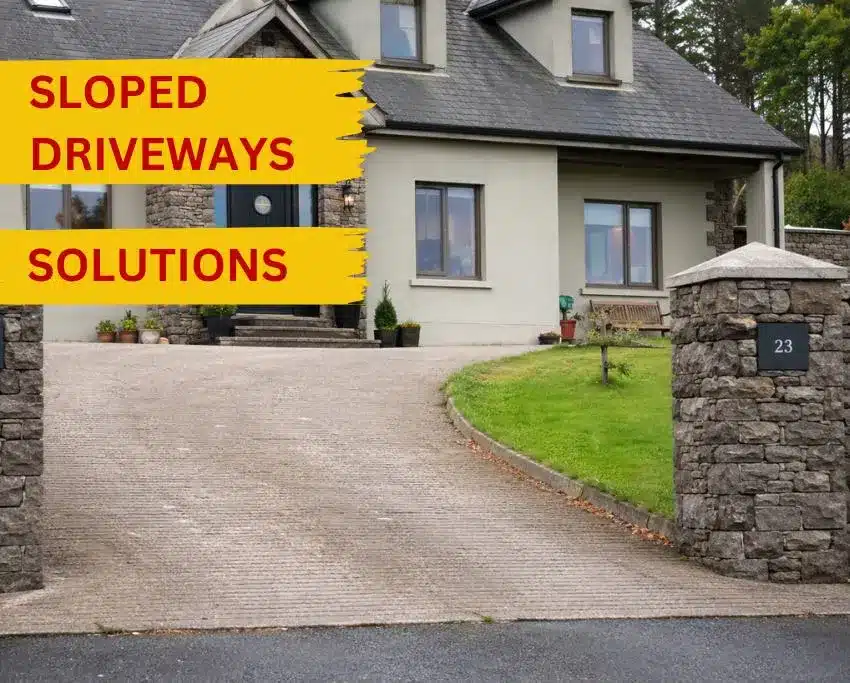
So, what is the best driveway for a sloped front garden?
For many Dublin homes, block paving is the strongest all-round choice for a sloped driveway because it offers grip, structure, design flexibility and good kerb appeal. Permeable block paving is even better where water runoff is a concern.
For gentler slopes and tighter budgets, stabilised gravel grids can be a practical and permeable option. Resin bound can look excellent on moderate slopes when the base is stable. Tarmac can work well on moderate slopes, but steep inclines need careful assessment. Concrete can be strong, but it must be textured and properly jointed.
The right answer depends on the slope, ground condition, water flow, driveway size, entrance layout, parking needs and how much maintenance you are happy to deal with.
Ask Zim for practical advice on your sloped driveway
Driveways & Patios Dublin is an owner-led driveway, patio and paving contractor based in Dublin 15. Zim brings over 20 years of hands-on experience to driveway projects across Dublin, Meath and surrounding areas.
If your front garden is sloped, the best first step is a site visit. The team can look at the gradient, access, drainage, sub base requirements, retaining walls and the most suitable driveway surface for your property.
Contact Driveways & Patios Dublin to discuss your sloped driveway project and get practical advice before choosing the material.



